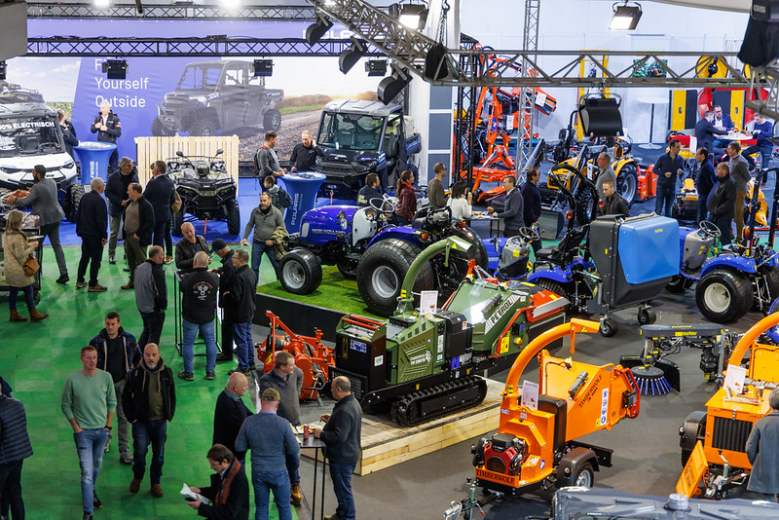
AGRIBEX 2025: agricultural mechanization accelerates its transformation
The economic balance sheet presented at AGRIBEX confirms what many players in the sector already suspected: the mechanization of agriculture is no longer just a question of power or capacity. It is entering a phase of radical transformation, dominated by innovation, sustainability, and efficiency. Built-in technologies are redefining the daily work of farmers and reshaping competition in the market. A solid sector despite pressure on employment
The economic analysis shows steady growth in employment among horticultural and agricultural dealers, despite a continuing shortage of technical profiles. In 2024, the agricultural machinery sector employed 2,116 people, 5.3% more than in 2021, confirming a positive trend. The financial solidity of the sector is also strengthening: horticultural dealers show a clear increase in their liquidity ratio, from 4.85 to 8.15, indicating a healthy financial structure. A contrasting market per segment
Market trends show a mixed picture. The segment of tractors with more than 50 hp is clearly doing well, with 2,158 registrations in 2024, which is 300 units more than in 2023 and a result that is above the five-year average of 2,058 units. Other machine families are lagging behind: rotary hay tedders and swath rakes are in sharp decline, while combine harvesters continue their decline with only 35 units sold in 2024. Seed drills are also showing a decline, with 112 units sold. Some segments are holding up better: sales of ultra-compact telehandlers remain stable at 37 units in 2024. Sales of rigid tine cultivators over 3 m continue to rise, reaching 99 units, and mechanical weed control remains dynamic until 2023. The market for sprayers, which is generally stable, is clearly shifting towards larger, more accurate, and more automated equipment, which is a sign of a technological transition that is already well underway. Clearly identified structural challenges
Although the indicators are encouraging, several challenges remain. The shortage of skilled labor remains one of the main obstacles for the sector. Currently, 500 vacancies remain unfilled in Flanders and 300 in Wallonia. Complex regulations, combined with requirements to reduce emissions, also complicate the daily life of businesses. However, the sector remains highly mobilized, thanks to trade fairs, specialized job platforms, and initiatives such as Dairy Rentability Day, which increase the attractiveness of the professions.
A sector in motion, focused on the future
Both at the Belgian and European levels, mechanization in agriculture is evolving rapidly. Precision technologies, robotics, automation, and data valorization are already determining factors for the agricultural businesses of tomorrow. To fully exploit the potential of this transition, stakeholders emphasize the importance of a clear policy framework and greater support for family businesses. AGRIBEX 2025 thus paints a picture of a sector in transition, strategic, dynamic, and already anchored in its future. More information
Hans Verstreken, coordinator of Fedagrim Federation Activities
h.verstreken@fedagrim.be
0475 98 98 76